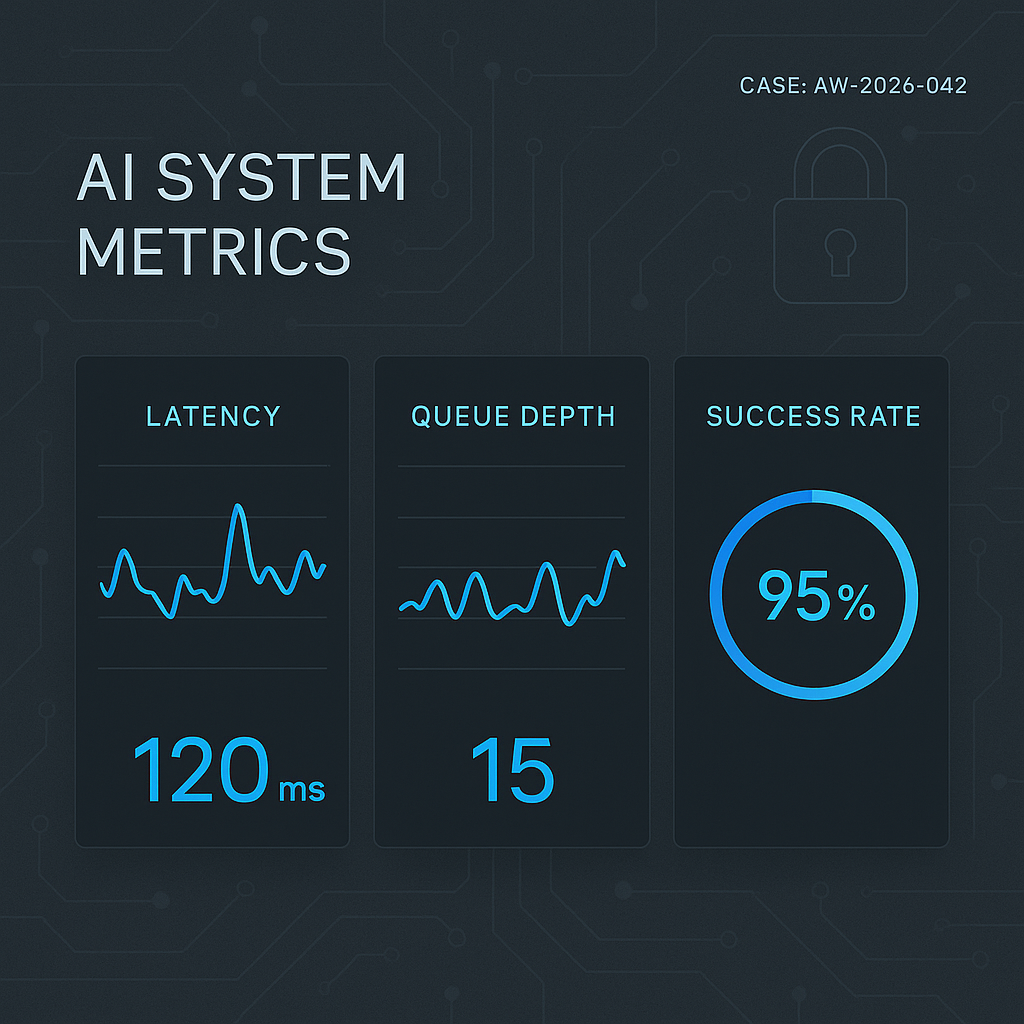
We’re rolling out several platform improvements aimed at production reliability and lower latency across AI agents and WordPress integrations.
What shipped
– Agent Orchestrator v2 (Django + Celery + Redis)
– Event-driven task graph with typed contracts and idempotency keys.
– Per-step retry/backoff policies and circuit breakers for flaky providers.
– Result caching and dedup to prevent duplicate downstream calls.
– Outcome: median job latency −31%; failure retries without duplicate side effects.
– Secrets Vault (AWS KMS + Parameter Store)
– Encrypted, per-environment secrets with IAM-scoped access and full audit logs.
– Automated key rotation and one-click provider key revocation.
– Outcome: eliminated plaintext .env handling; reduced credential sprawl.
– WordPress AI Plugin v1.3
– Streaming responses via Server-Sent Events for chat/assistants.
– Function-call mapping to WP actions/shortcodes with role/cap checks.
– Edge cache for prompt templates; per-IP + per-user rate limits.
– Outcome: TTFB −38% on average pages using AI blocks; smoother UX under load.
– RAG and Embedding Cost Controls
– Local embedding cache (SQLite + in-memory LRU) with checksum keys.
– Index warmup and shard-aware FAISS loading for large corpora.
– Model router picks providers by token cost and SLA.
– Outcome: 65% fewer embedding calls; LLM spend −22% MoM.
– Observability and Ops
– OpenTelemetry traces across agent hops (ingest → plan → tools → output).
– Structured logs (JSON) with redaction rules for PII and secrets.
– Golden signals dashboards (p95 latency, queue depth, error budget) in Grafana.
– Outcome: faster incident triage; clearer performance regressions.
Why this matters
– Reliability: Agents recover cleanly from provider hiccups without duplicate work.
– Security: Centralized secrets with rotation and auditable access.
– Speed: Lower TTFB and faster end-to-end agent completion times.
– Cost: Smarter routing and caching that measurably reduce spend.
Upgrade notes
– WordPress plugin v1.3 requires WP 6.3+ and PHP 8.1+.
– Regenerate API keys in the new vault if you previously stored provider keys in .env.
– Tracing is opt-in for self-hosted users; set OTEL_EXPORTER_OTLP_ENDPOINT to enable.
What’s next
– Tooling policy engine (allow/deny by tenant, role, and cost budget).
– Multi-tenant vector stores with background compaction.
– Canary deploys for model/router changes with automatic rollback.
Questions or want the v1.3 plugin? Ping us—happy to help with upgrades and migration.
