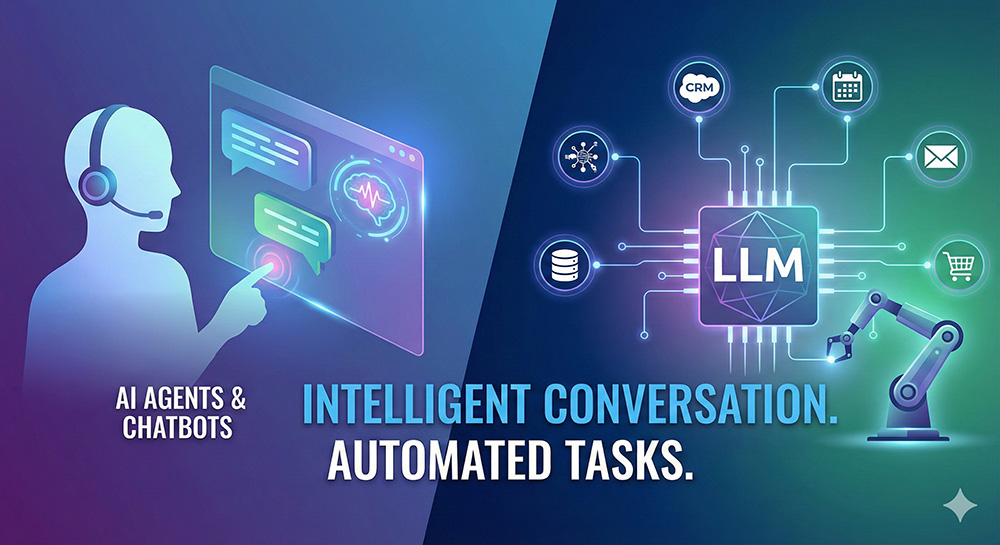
AI agents and chatbots are software systems that simulate conversation and perform tasks using natural language. They can be rule-based or use machine learning models such as large language models (LLMs) to understand user input, maintain context, and generate relevant responses. As they evolve, chatbots are being deployed across websites and messaging platforms to provide customer service, lead generation, scheduling, and more.
First, an agent collects a user question or command and classifies the intent using natural language understanding. It then retrieves information from knowledge bases or connected applications (CRM, calendars, email). Modern chatbots also use generative models to craft personalized responses rather than generic scripted answers. By connecting to APIs, these agents can perform tasks such as placing orders, booking appointments, or updating records.
Building an effective chatbot requires careful planning. Start by defining your goals and audience: do you want a lead-generation bot, a support assistant, or a general FAQ chatbot? Map out key user journeys and decide which tasks can be automated. Then design conversation flows with fallback options for ambiguous questions. If using generative AI, consider guardrails to prevent off-topic or unsafe responses.
Integration is essential. Chatbots are most valuable when connected to CRM systems, calendars, email platforms, and databases. For example, a real-estate chatbot can automatically log inquiries in a CRM, send property details from a Google Sheet, and schedule viewings on a calendar. APIs and automation platforms make it easier to orchestrate these flows.
When deploying chatbots, test them extensively with real users. Iterate on the design based on conversation logs. Train models on domain-specific data to improve understanding of industry terminology. Provide a way for users to speak to a human if needed. Monitor analytics such as resolution rate, drop-off points, and conversion metrics to continuously optimize.
As generative AI becomes more powerful, chatbots are evolving from simple question-answering tools to proactive digital assistants. With retrieval-augmented generation, agents can search live data sources and compose answers on the fly. They can summarize long documents, rewrite text for different reading levels, and generate personalized marketing copy. Combined with speech synthesis, they can serve as voice assistants.
Security and ethics are also important. Ensure that sensitive data (personal information, financial details) is handled securely and that chatbots do not share private information. Provide transparency that users are interacting with an AI. Use bias-mitigation techniques to prevent discriminatory responses. Comply with relevant regulations such as GDPR and the California Consumer Privacy Act (CCPA).
In summary, AI agents and chatbots offer tremendous potential to automate workflows, improve customer experiences, and scale service delivery. By planning thoughtfully, integrating with existing systems, and leveraging the latest advances in conversational AI, businesses can deploy chatbots that drive engagement and efficiency while lea
ving human staff free to focus on high-value tasks.